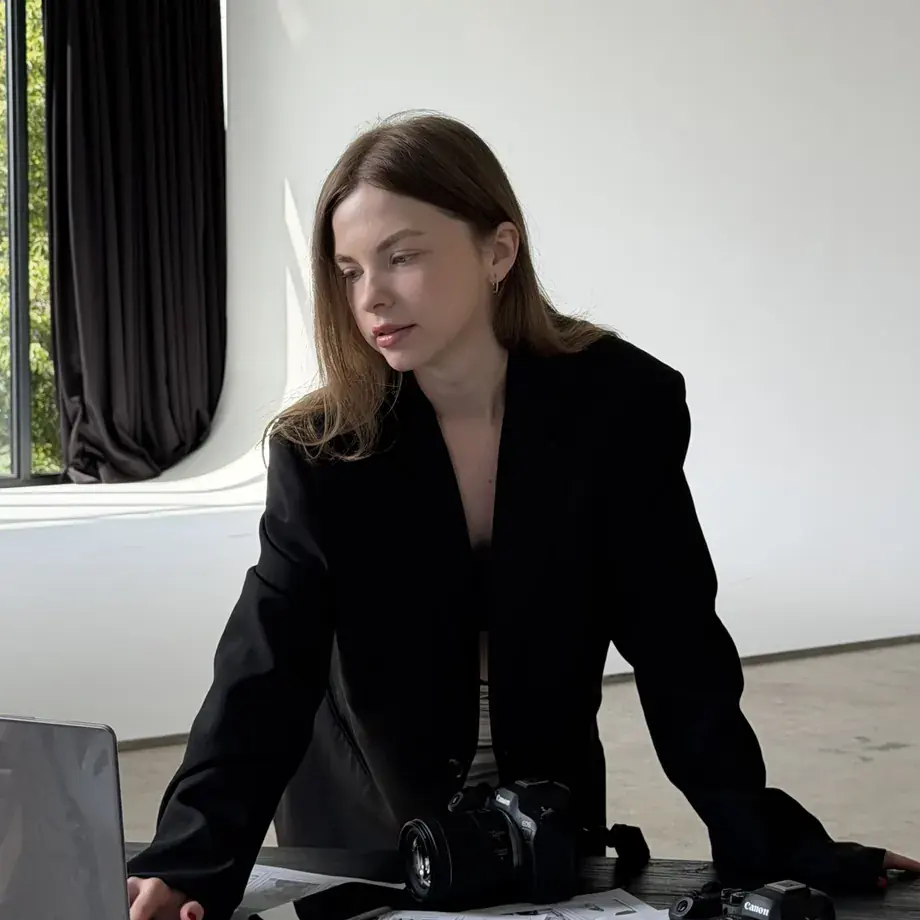


In Toronto, the honest answer is: it depends. Choose a content agency if you need strategy and several skills and have little time to manage the work. Choose a freelancer for one clear job you can manage yourself. Choose an in-house hire if content is a daily task that needs someone inside your business. The right option depends on how much content you need and who will manage it.
What does a content agency do?
A content agency plans and produces photos, video, posts and ad creatives for a business, and often publishes them, all built around one strategy and goal. An agency can bring several of these skills together, so you brief fewer people. Ask each agency who actually does the work.
Be an Art is a content agency in Toronto. <!-- F001 --> Our services include photo and video content, SMM services and visual branding creation, AI-generated content production, Instagram and Facebook ads management, and website creation and brand identity development when needed, plus photography for restaurants, brands and private sessions. <!-- F017 F018 F019 F020 F021 F022 --> You can see all of them on the home page. To see how we run social media for a brand, read the social media management page.
Our work starts with understanding the business. <!-- F048 --> For a restaurant content day we start with a brief, then plan the shoot. <!-- F045 --> See how a content day works. As we say on Instagram: "YES, WE CAN CREATE A MONTH OF CONTENT IN ONE DAY. But that's actually the easiest part." <!-- F044 --> The planning before a shoot usually matters as much as the shoot itself.
Who are the "big 6" media agencies, and do you need one?
This is general background, not a list. "Big 6" usually refers to the largest global advertising and media holding groups, built for very large brands in many markets. A local business in Toronto usually hires a smaller agency or a freelancer.
Agency, freelancer or in-house: how do they compare?
This table shows how the three setups usually differ. It is general advice, so check the details with each option.
| Factor | Agency | Freelancer | In-house |
|---|---|---|---|
| Best for | Ongoing work that needs strategy and several skills | One clearly defined job | Content as a daily task |
| What you manage | The brief, approvals and feedback | The brief, the schedule and the review | A person: tasks, tools and development |
| Skills covered | Can bring several together; ask who does what | Usually one or two | One person's skills |
| If someone is away | Ask how the work is covered | The work often pauses | The work pauses unless you have backup |
| Files and accounts | Agree ownership in writing before you start | Agree ownership in writing | Usually the business owns them; confirm in the contract |
| Costs to check | Anything outside the agreed scope | Extra rounds of edits and rush work | Equipment, software, training and management time |
When does a freelancer make sense?
A freelancer is a good choice when the job is specific: a one-off photo shoot, Reels edited from footage you already have, a logo, a few ad images. You brief, they deliver, and you often get a direct line to the person doing the work.
The limits are practical, not a question of quality. One person has one calendar and a limited set of skills. Strategy, shooting, editing, writing and ad management are different jobs, so asking one freelancer to cover all of them can leave something thin. And if your freelancer is busy or away, your content stops.
A freelancer fits best when:
- the task is defined and has an end
- you can write a clear brief and review the result
When is an in-house hire the better choice?
In-house makes sense when content is a daily part of the business: frequent events, a fast-changing menu or product range, same-day posting. A person in your space knows your brand deeply and can react quickly.
Count the whole picture before you decide. An employee means salary plus equipment, software, training and management time, and if they leave, the know-how leaves with them.
A mix can work well: one person in-house for daily posting, and an outside team for planned production such as a shoot day.
How do I choose between an agency, a freelancer and an in-house hire?
Start with the work, not the label. Go through this checklist, then see which option fits most of your answers:
- What do you need each month: a few pieces for a launch, or steady content in several formats?
- Do you need a strategy, or only production?
- Who on your side will brief, approve and publish, and how many hours a week can they give?
- Which goal should the content move: bookings, orders, enquiries, awareness?
- What happens when one person is sick, away or leaves?
- Who owns the files and the accounts when the work ends?
Or decide in a minute with three questions:
- Is the work defined, with an end date? Then a freelancer is usually simplest.
- Is content a daily task, and can you employ and manage someone? Then consider in-house.
- Do you need strategy plus several skills, with little time to manage? Then an agency is usually the better fit.
If two answers apply, start with one defined project and see how the collaboration feels before committing to more.
Three examples, not clients, show how this can play out:
- A café opening a second location needs launch content in several formats and a plan. An agency, or a freelancer for the launch shoot with the owner posting, usually fits.
- A solo practitioner, such as a beauty specialist, needs a few strong photos and a steady profile. A freelancer often fits.
- A small brand before a launch may need strategy, photo, video and ads together. An agency usually fits. If the scope is unclear, start with one defined project.
What should you write down before you brief anyone?
For a restaurant content day, our brief starts from topics such as a new menu, bookings, a new location, the team, a seasonal campaign and brand awareness. <!-- F045 --> Any business can borrow the idea. Answer these seven questions in writing before you brief an agency, a freelancer or a new hire:
- Is there something new to show: a menu, a product, a service?
- Do you want more bookings or orders?
- Is there a new location or space?
- Should the content show your team?
- Is there a seasonal campaign?
- Do you want to be remembered more, and by whom?
- Who approves the result?
Two of our guides help here. How to build a content strategy for views and sales explains what content should achieve, and how to read a social media agency quote explains what shapes agency pricing.
Is a content creator the same as a content agency?
No. A content creator is usually a person who makes content and often appears in it. A content agency plans and produces content for a business, and may publish it and run ads. If you want a face for your brand, look for a creator. If you want a plan and production behind it, look for an agency or a freelancer.
How do you tell if a Toronto content agency is reputable?
- Ask to see work for businesses like yours, and what goal each project had.
- Ask who exactly will do the work and who your point of contact is.
- Be careful with guaranteed views, followers or sales. We cover why in our guide to reading a quote.
- Look at the agency's own channels. Do they look like the work it promises you?
- Ask what is included, what is extra and how you receive the files.
A good agency answers these plainly, and will tell you when another option, such as a freelancer, is the better fit. We are an agency, so weigh our view accordingly. For "Top 10 agencies" lists, check whether the listing is sponsored and where the reviews come from.
For one example of how a content-and-ads project can be set up, see our paid ads case for a cleaning company. <!-- F053 --> More on this topic is in our marketing section.
If you would like to compare notes, we're always up for that conversation. Message us on Instagram @be_an.art or use the contact page and tell us what you are trying to achieve.
Frequently asked questions
What does a content agency do?
A content agency plans, produces and often publishes content for a business: photo, video, social posts, ad creatives and the strategy behind them. Some also manage paid ads and branding.
Is a content agency better than a freelancer?
Neither is better in general. A freelancer suits one clearly defined job, while an agency suits ongoing work that needs strategy and several skills.
What is the difference between a content creator and a content agency?
A content creator is usually a person who makes content and often appears in it. An agency plans and produces content for a business, and may publish it and run ads.
When should a business hire in-house for content?
When content is a daily task and you can employ, equip and manage a person. A mix with an outside team for bigger productions can work well.
How much does a content agency cost?
It depends on the scope: formats, volume, shoot days, ads and ongoing management. We share pricing on request, once we understand what you need. Our guide to reading a social media agency quote explains what shapes the price.
Written by Anna · Nov 3, 2026 · 7 min read.