

Here's the thing about a brand: it's what people associate with you, and brand identity is the set of signals behind it, not only your logo. It is your colours, your photos, your words, how you reply to messages and how your team behaves. A logo is one piece. Consistency across all of them is what makes a business recognizable.
What do people associate with your business?
Picture a customer who has never met you. They see your profile photo, scroll a few posts, open your website and maybe send a message. By the end, they have a feeling about you. That feeling is your brand.
Our own starting point was a simple observation: "Great people. Great brands. Weak visuals". <!-- F007 --> That was the problem we set out to solve. A business can be good at what it does and still look like something else.
So when an owner says "we need a new logo", we suggest a step back. Ask what people say about you today, and what you want them to say. A logo cannot close that gap alone.
What is the difference between branding and a logo?
Four words get mixed up. Here they are in plain terms:
| Term | In plain words |
|---|---|
| Logo | A mark or wordmark that identifies you. One piece of the whole. |
| Brand identity | The visible and verbal signals that make you recognizable. |
| Branding | The ongoing work of keeping those signals consistent. |
| Brand | What people associate with you, planned or not. |
The signals that make up a brand identity, besides the logo, are these:
- Colour. The same few colours, used the same way, everywhere.
- Photo style. Light, framing and mood that look related from one image to the next.
- Tone of words. Do you sound warm, direct, playful or formal? Pick one and keep it.
- How you reply. A prompt, clear answer to a message says as much about you as a post does. We suggest answering enquiries quickly, because the first reply shapes the impression. <!-- F085 -->
- How your team shows up. Your team is part of your brand. <!-- F062 --> How they dress, speak and behave is part of what customers remember.
Notice that most of these are habits, not files. You can fix a habit without hiring anyone.
How do colours, photos and words work together?
They work when they repeat. One orange post is a post. Orange in your profile, your photos, your menu and your website is a brand.
Think of it as three layers saying the same thing. Colour sets the mood at a glance. Photos show what you do. Words explain it and tell people what to do next. For example (hypothetical), a bakery whose bio says "simple and natural" while its photos are neon and its captions shout sends two messages. Visitors feel the mismatch even when they cannot name it.
We have posted about colour in branding, and about moodboards and concepts. <!-- F040 --> A moodboard is a useful tool here, because it lets you test a direction with images before you commit to anything.
The same logic carries over to social media. If you want to see how we think about visual branding and social media, our page on social media management is a good start. <!-- F019 --> Consistency matters, whoever holds the phone.
Where do you start with a brand?
Start with positioning, in two questions: who is your business for, and what do you want to be known for? Write the answers in a sentence each. Colours, photos and words should follow from them.
Then add the goal. Decide what you want the brand to do, whether that is more bookings, a new menu launch, a hire or simply being remembered. <!-- F083 --> Work backwards to what people need to see and hear.
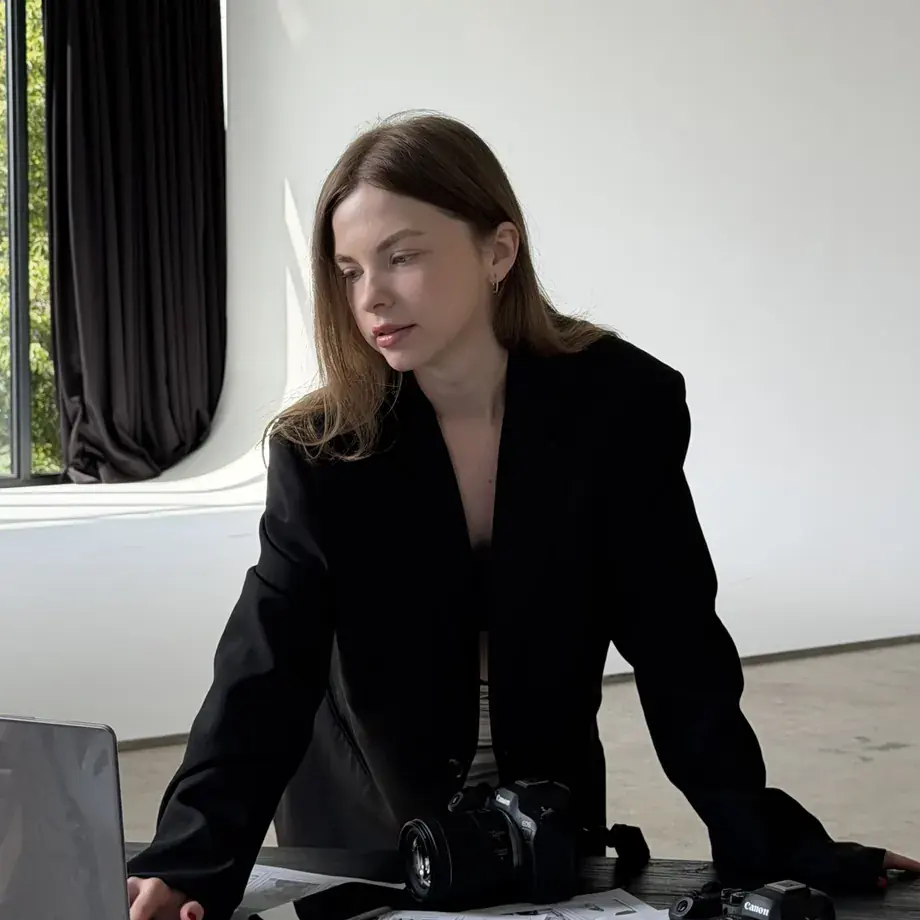
With that in mind, here is how Anna describes the agency: “I built ‘Be an Art’ — a content agency that helps brands show up with intention, not just post for the algorithm.” <!-- F006 --> That idea applies to any business. Showing up with intention means every post, photo and reply has a reason to look the way it does.
Brand also sits next to strategy. A consistent look makes your content easier to recognize, and a clear plan makes it easier to measure. For the second half, read our guide to content strategy that sells. For the voice part, see our storytelling ideas.
Do I need a full brand identity, or is something lighter enough?
It depends on your stage. If your look has only drifted, you can often fix it yourself: we suggest a moodboard, a short list of your own visual rules and a tidy-up of your profile.
A fuller brand identity is worth a conversation when:
- your look is inconsistent across your profile, website and printed materials
- you are launching, or changing direction
- you are about to invest in a website or a campaign and want it to stand on solid ground
- you cannot describe your brand in three words, and neither can your team
Brand identity development is one of our services, offered when needed. <!-- F022 --> If you are comparing who could help, our guide to the agency, freelancer or in-house options lays out the differences.
Checklist: a brand audit you can do today
You need your phone, your laptop and a friend who will be honest. Take your time with each step.
- Write three words you want customers to use about you.
- Ask a friend or a regular customer for three words they would use today. Compare the two lists.
- Go through each touchpoint below and mark it keep, fix or drop.
- [ ] Profile photo and bio, see our Instagram bio checklist
- [ ] Your latest posts
- [ ] Your website: first screen, photos, wording
- [ ] Photos used in menus, flyers or listings
- [ ] How you answer messages and comments
- [ ] How your team looks and speaks with customers
- Run the consistency test. Put five images from your feed side by side. Do they look like one brand? If you hesitate, you have found your first job.
- Pick the single fix that would change the most. Do it first.
Do not try to repair everything in one go. A brand improves one decision at a time.
Talk to us about your brand
We are a content agency in Toronto, and brand audits like this one are a favourite kind of conversation for us. <!-- F001 --> If yours shows gaps, tell us about your business and what you want your brand to do. Message us on Instagram (@be_an.art) about brand identity work (offered when needed), or use the contact page. <!-- F004 --> Pricing is shared on request, because it depends on the scope. You can also browse more guides in our marketing section.
Frequently asked questions
What is the difference between branding and a logo?
A logo is one mark that identifies you. Branding is the wider work of keeping your colours, photos, words and behaviour consistent, so people know what to expect from you.
What is brand identity?
It is the set of visual and verbal signals that make a business recognizable: colour, imagery, tone and the way it behaves.
Can I build a brand without hiring anyone?
Often yes, for the basics. Choose a few colours, a photo style and a tone of words, and use them everywhere. A fuller identity is worth discussing when your look is inconsistent or you are about to launch.
How do I know if my brand is consistent?
Put five images from your feed side by side. If they do not look like one brand, start there.
Written by Anna · Nov 19, 2026 · 6 min read.